


Understanding the Basics of Computerized System Validation (CSV) in Pharma
01 Dec, 2025
Introduction
In today’s pharmaceutical world, digital systems are important for every operation. They are important for things like manufacturing lines, quality testing and even for data recording and batch release.
When these systems are functioning well, they protect product quality and patient safety. But if they fail, a small error can turn into big compliance risks.
That’s why Computerized System Validation (CSV) is important. CSV is the structured and documented approach that makes sure a computerized system works as it should.
It also makes sure that it consistently delivers accurate data and fully complies with regulatory requirements. It gives companies the confidence that their digital systems are both reliable and audit-ready.
Why CSV Matters in the Pharmaceutical Industry
In pharmaceutical companies, there are strict regulations and the system that is used for GMP or GxP activities should be trustworthy. CSV ensures:
- Patient safety: When systems are validated, they reduce the risk of errors that can affect product quality. This way it ensures safety of the patient.
- Data integrity: Data integrity is another important thing. When roles are strong, they prevent data manipulation, misentry, and loss.
- Regulatory compliance: If you fail to validate the system, it can result in FDA Warning Letters or production shutdowns.
- Business continuity: When the systems are validated, it decreases downtime and protects valuable clinical and manufacturing data.
Key Regulations and Guidelines You Must Know
Here are some of the most important regulations and guidelines that you know about:
| Regulation or Guideline | What It Covers |
| FDA 21 CFR Part 11 | Requirements for electronic records and electronic signatures, including audit trails and access controls. |
| EU Annex 11 | Lifecycle validation, data integrity rules (ALCOA+), risk management, supplier oversight. |
| ISPE GAMP 5 | Industry best practice for risk-based validation, software categorization, testing depth, and scalable documentation. |
The CSV Lifecycle Explained
CSV is a systematic lifecycle. Each phase gives evidence that the system is fit for use.
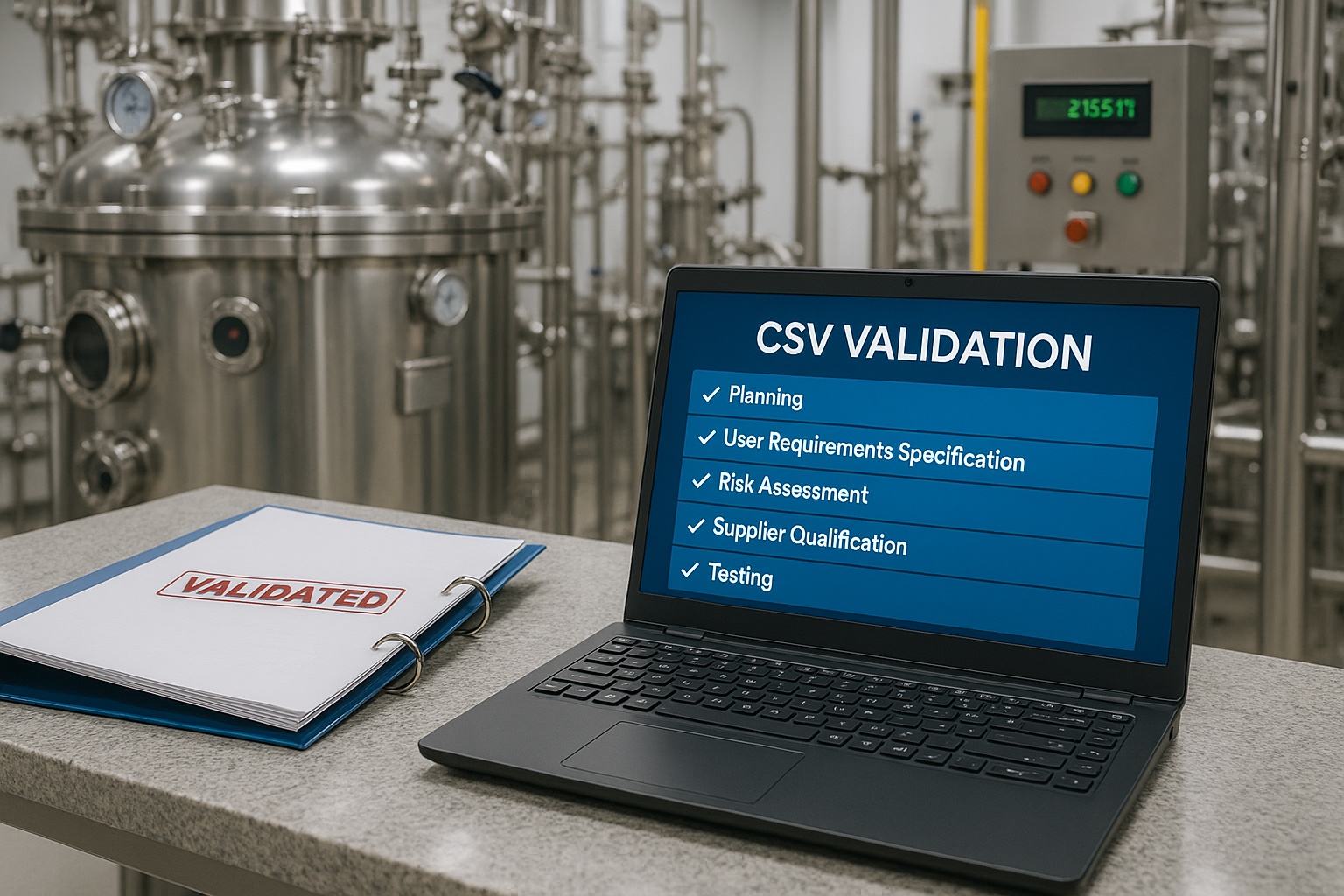
1. Planning
Planning is one of the most important aspects of anything. A CSV lifecycle starts with a proper plan. This plan tells about scope, responsibilities, timelines, validation strategy, and system criticality.
2. User Requirements Specification (URS)
URS states what the system is supposed to do. It includes functional needs, security, reporting, audit trails, and data handling.
3. Risk Assessment
Then comes the risk analysis. It helps in finding out what are the system functions that impact product quality or data integrity. Validation effort must be proportional to risk.
4. Supplier Qualification
Vendor audits are important for cloud or SaaS systems. Companies should evaluate the supplier’s development practices, cybersecurity controls, and service agreements.
5. Design and Configuration
System configuration or design is documented and mapped to user requirements.
6. IQ, OQ, PQ Testing
| Stage | Purpose |
| IQ (Installation Qualification) | Verifies correct installation, environment setup, and system prerequisites. |
| OQ (Operational Qualification) | Test system functions, security, audit trails, error handling, and configuration. |
| PQ (Performance Qualification) | Confirms real-world performance in the production environment. |
7. Data Migration Validation
All the data that gets moved from a legacy system needs to be checked for accuracy and integrity. That is called data migration validation.
8. Validation Summary and Go Live
A Validation Summary Report (VSR) is a report that compiles all evidence and provides final approval to operate the system.
9. Ongoing Maintenance and Review
Keeping on checking the maintenance and reviewing the work is very important. It includes training, SOPs, periodic reviews, change control for patches or upgrades, and cybersecurity monitoring.
10. Decommissioning
Then there is Decommissioning. You have to properly retire the data. It makes sure that the archived data remains accessible and audit-ready.
What Gets Tested in CSV
Proper testing in CSV, makes sure that the system always delivers secure and accurate results. Here is what gets tested in CSV:
| Type of Test | Purpose |
| Traceability Testing | Ensures all requirements are covered by test cases. |
| Positive or Negative Tests | Verify expected behavior and error handling. |
| Security Tests | Confirm access control, login rules, and password policies. |
| Audit Trail Testing | Ensures audit logs record user actions and cannot be altered. |
| Backup or Restore Testing | Confirms data recovery and business continuity. |
| Interface Testing | Validates accurate data exchange between systems such as LIMS and ERP. |
Common Pitfalls and How to Avoid Them
Here are a few common pitfalls that you may come across while the process is going on:
- Using vague or untestable requirements: You should write clear and measurable requirements that can be tested. You can use requirement traceability matrices (RTMs) to ensure complete coverage.
- Relying too heavily on vendors without independent verification: What you need to do, is to perform an independent risk assessment and verify all important functionalities yourself. Do not rely solely on vendor claims.
- Skipping audit trail reviews: If you skip audit trails, it can result in missing data and integrity issues. Always include audit trail review steps in routine procedures and also verify them during validation testing.
- Treating CSV as a one-time document exercise: Do not treat CSV as just a documentation. It is a lifecycle activity. Adopt a life-cycle approach with continuous monitoring and periodic assessments.
- Failing to validate data migration: If you fail to validate your data migration, it can lead to incorrect or corrupted data. It is very important that you perform test migrations, verify data integrity, and document the entire migration process.
- Not performing periodic reviews after updates or patches: make it a priority to implement a formal change control process and always conduct periodic reviews so that you can confirm that the system is in a validated state.
Conclusion
Computerized System Validation is a foundation for trustworthy data and safe products in the pharmaceutical industry.
Validation practices need to evolve with time as cloud systems, AI, and automation have started to change the pharma industry.
By following a risk-based and lifecycle-driven CSV approach, companies can stay compliant and audit-ready in the accuracy of their digital systems.